
Libsyn vs. Podbean
A Professional-Grade Platform for Growing Shows
Maximize your take-home earnings, connect with premium advertisers, and build a lasting catalog across the open web.
Built for Your Business Era
Monetize With Institutional Power
Libsyn connects you directly to premium automated and host-read campaigns with dynamic ad insertion, paid recommendations, and an in-house network of 400+ brands.
Podbean limits its monetization features to advanced plans and strict traffic tiers.
Publish Multi-Format Everywhere
Capture the fastest-growing audiences by distributing video podcasts to Spotify and Apple Podcasts (coming soon) from a single dashboard.
Podbean requires manual uploads to external video platforms.
Uncap Your Audience Reach
Podbean funnels your listeners into its own app directory, stifling your growth potential.
Libsyn vs. Podbean at a Glance
| Libsyn | Podbean | |
|---|---|---|
| Monetization for any show size | ✓ |
✕
Restricts low-volume shows
|
| Insert ads on video episodes | ✓ |
✕
Blocks ad slots on video episodes
|
| Distribute without app restrictions | ✓ |
✕
Ties engagement tools to a proprietary app
|
| Publish video directly to Spotify and YouTube | ✓ |
✕
Requires a manual, double-upload workflow
|
| Access IAB-certified stats | ✓ | ✓ |
| Host multiple RSS feeds under one plan | ✓ | ✓ |
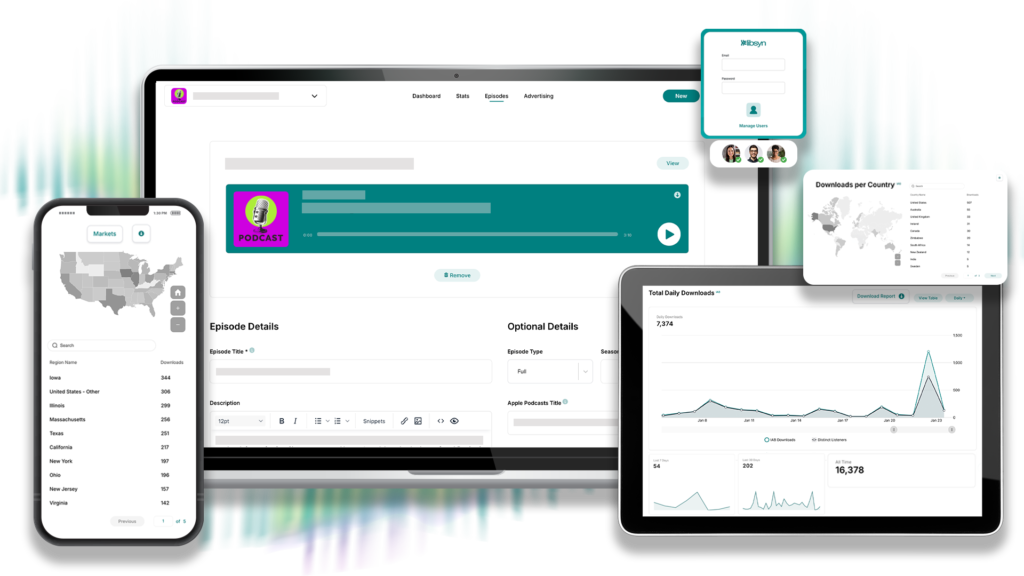
Want to See the Libsyn Platform Run Your Show?
See how your show would publish, monetize, and migrate before you move a single episode.
Join a Live Demo
Why Podcasters Choose Libsyn Over Podbean
On Libsyn, you can monetize and distribute modern multi-format content seamlessly. Apply DAI and programmatic ad campaigns across both audio and native video formats, delivering video episodes directly to YouTube, Spotify, and Apple Podcasts (coming soon) from a single dashboard.
Podbean restricts its ad software and marketplace to audio episodes and lacks direct video integration. That means multi-format creators must manually bake permanent sponsor ads into video files before uploading them to external video platforms.
Who’s got the edge? Libsyn. For modern creators expanding into video, Libsyn publishes native video directly to the world’s largest listening directories without sacrificing revenue.
Libsyn connects you directly to Libsyn Ads, one of the industry’s largest independent ad networks. With no download requirements, you can deploy programmatic ads across your entire catalog and high-paying, host-read campaigns from thousands of premium global brands.
Podbean restricts automated programmatic monetization to advanced plans or specific traffic tiers. Growing shows must rely on manual sponsor pitching or fan crowdfunding to generate income before hitting high-volume download milestones.
Libsyn’s technology is built for the open web and distributes to Apple Podcasts, Spotify, Amazon Music, YouTube, and all other major directories with one-click submission. Your listeners enjoy a premium experience, seamless access to bonus audio, and independent data tracking regardless no matter what.
Podbean restricts many of its features to its proprietary app, requiring listeners to download extra tech and widening the divide between you and your audience.
Who Should Make the Switch
Choose Libsyn if:
- You want automated programmatic ad options with zero entry-level download minimums.
- You publish multi-format content and want native video delivered directly to YouTube and Spotify from one dashboard.
- You want your entire back-catalog of older episodes to keep contributing to your revenue.
- You prefer open-web distribution across all major listening directories.
- You need advanced category exclusions, brand safety filters, and IAB-certified metrics for ad pitches.
Choose Podbean if:
- Your content is strictly audio-focused, or you do not plan to distribute native video feeds to Spotify and Apple.
- You’re comfortable manually applying sponsor messages to video files and uploading them to video directories independently.
- Your production workflow relies on mobile-first recording and editing directly inside a smartphone app.
- Live audio broadcasting, chat rooms, and virtual currency are core pillars of your show.
Why It Pays to Grow on Libsyn
If you want to treat your podcast like a business, you go where the money is. Libsyn has paid creators over $112 million in ad revenue while building an active community of 5,000+ monetizing users. Last year alone, Libsyn helped monetizing creators increase their downloads by 17% year-over-year.
Podbean is a reliable place to host your show, but Libsyn is where ambitious shows scale their listenership and maximize their take-home revenue.
Common Questions About Libsyn vs. Podbean
Libsyn offers a broad, built-in monetization ecosystem. With revenue streams available on any plan, you can earn across new and old episodes as your show grows. In minutes, you can turn on automatic ads, host-read ads, and PodRoll ads across audio and video—tapping into a network of 400+ partner brands and joining 5k+ shows that already monetize with Libsyn.
Libsyn includes advanced controls for monetization, advertising, destinations, and video, which creates more depth in the platform even as the everyday publishing flow stays simple. That added capability is what gives a growing show room to earn and expand.
- Transistor — Excellent for smaller teams launching multiple casual side projects, but penalizes your success with strict monthly download limits and leaves you to hunt for ad sponsors entirely on your own.
- Spotify for Creators — Free and highly accessible for absolute beginners, but offers very limited independent publishing control and locks you out of premium, off-platform ad network revenue.
- Captivate — Geared toward solo creators who want audience‑growth tools bundled in, but with less emphasis on deep publishing workflows.
- Podbean — Good for creators who prioritize mobile-first recording and internal community features.
- Buzzsprout — Optimized for casual creators who prize a simple dashboard over advanced monetization, certified ad reporting, or deep catalog backfilling.
Libsyn’s support team answers questions by email and through the help request form in your account, seven days a week—Monday through Friday 7 AM – 7 PM ET and weekends 11 AM –7 PM ET. The team includes working podcasters, so your answers come from people who actually publish shows, not a generic help desk. You also get a full knowledge base, a YouTube learning channel, regular webinars, and a live system-status page to check service anytime.
Take Your Show to the Professional Stage
Move to Libsyn today to tap into a $112M creator marketplace. No app restrictions, no artificial limits.