
Libsyn vs. Transistor
A Serious Platform for Serious Revenue
Connect with 400+ advertisers, earn from your entire catalog, and grow your audience without download caps
Built for Your Next Stage of Growth
Early-stage hosting platforms, like Transistor, are great for getting started, but serious monetization requires a different kind of partner.
Monetize With Institutional Power
Libsyn connects you to premium automated and host-read campaigns with dynamic ad insertion, paid recommendations, and an in-house network of brands.
Transistor lacks a built-in marketplace, leaving you to source deals entirely on your own.
Prove Your Value to Sponsors
Libsyn gives you IAB-certified analytics, so your stats are ready to drive confidence in sponsor pitches, media kits, and brand deals.
Transistor analytics are not IAB-certified, making it sponsorships and advertising risky.
Grow Your Show Without Penalties
Transistor’s download-based pricing forces expensive plan upgrades as successful shows grow.
Libsyn vs. Transistor at a Glance
| Libsyn | Transistor | |
|---|---|---|
| Grow your audience without download caps | ✓ |
✕
Plans are capped by monthly downloads
|
| Tap a built-in ad marketplace | ✓ |
✕
No built-in ad marketplace
|
| Access IAB-certified stats | ✓ |
✕
Analytics lack the official IAB certification that premium brands require
|
| Instantly monetize your entire catalog | ✓ |
✕
Requires manual setup and external tools to backfill episodes with ads
|
| Host multiple RSS feeds under one plan | ✓ | ✓ |
| Track show growth and episode performance | ✓ | ✓ |
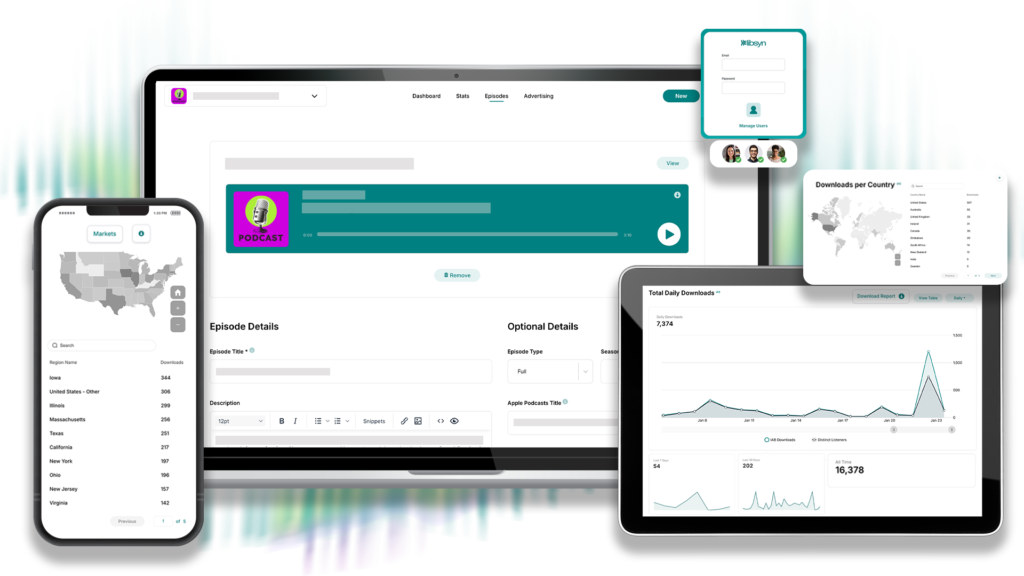
Want to See the Libsyn Platform Run Your Show?
See how your show would publish, monetize, and migrate before you move a single episode.
Join a Live Demo
Why Podcasters Choose Libsyn Over Transistor
Libsyn connects you to one of the industry’s largest independent ad networks so you can tap automated ads and high-paying, host-read campaigns from thousands of premium global brands.
Transistor lacks a built-in ad marketplace or native ad network, leaving you to cold-pitch and manage sponsors entirely on your own.
Both Libsyn and Transistor distribute to Apple Podcasts, Spotify, Amazon Music, and the other major directories with one-click submission. Libsyn has done it since 2004 and delivered more than 75 billion downloads globally, carrying large catalogs and networks alongside indie shows.
Who Should Make the Switch
Choose Libsyn if:
- You want direct access to an advertising marketplace, not just tools for inserting ads.
- You want flexible, stackable ways to build a passive revenue stream.
- You need IAB-certified numbers that top-tier ad networks and corporate brands trust.
- You don’t want your listener growth to determine your monthly hosting price.
- You want your entire catalog to contribute to your revenue.
Choose Transistor if:
- Your monthly download volume stays completely flat and fits comfortably within a standard cap.
- You run several smaller, early-stage shows under one general umbrella account.
- You prefer manually sourcing and managing your own sponsors.
- Private podcasting for an internal corporate team or a small membership is your main use case.
Why It Pays to Grow on Libsyn
If you want to treat your podcast like a business, you go where the money is. Libsyn has paid creators over $112 million in ad revenue while building an active community of 5,000+ monetizing users. Last year alone, Libsyn helped monetizing creators increase their downloads by 17% year-over-year.
Transistor is a reliable place to host your show, but Libsyn is where ambitious shows scale their listenership and maximize their take-home revenue.
Common Questions About Libsyn vs. Transistor
Moving from Transistor to Libsyn is straightforward. Your episodes, artwork, and metadata come with you.
After you sign up, Libsyn imports your full back catalog from your Transistor RSS feed. The Libsyn team offers free migration help if you want a hand. You then set a 301 redirect inside your Transistor account under Advanced Settings. Keep your account open for about three weeks while directories update.
The redirect carries your subscribers and your existing directory listings to the new feed, so no one has to resubscribe and your show keeps its place.
Libsyn offers a broad, built-in monetization ecosystem. With revenue streams available on any plan, you can earn across new and old episodes as your show grows. In minutes, you can turn on automatic ads, host-read ads, and PodRoll ads—tapping into a network of 400+ partner brands and joining 5k+ shows that already monetize with Libsyn.
Transistor provides ad insertion tools but generally expects creators to source and manage their own advertising campaigns.
Transistor generally offers a shorter learning curve. Libsyn includes more controls for monetization, advertising, analytics, destinations, subscriptions, and video, which creates more depth in the platform even as the everyday publishing flow stays simple. That added capability is what gives a growing show room to earn and expand.
Libsyn plans are based on monthly upload storage, not download volume or listener count. That means audience growth will not force you into a higher plan.
- Transistor — Excellent for smaller teams launching multiple casual side projects, but penalizes your success with strict monthly download limits and leaves you to hunt for ad sponsors entirely on your own.
- Spotify for Creators — Free and highly accessible for absolute beginners, but offers very limited independent publishing control and locks you out of premium, off-platform ad network revenue.
- Captivate — Geared toward solo creators who want audience‑growth tools bundled in, but with less emphasis on deep publishing workflows.
- Podbean — Good for creators who value mobile production workflows over monetization or distribution depth.
- Buzzsprout — Optimized for casual creators who prize a simple, baseline dashboard over advanced monetization, certified ad reporting, or deep catalog backfilling.
Libsyn’s support team answers questions by email and through the help request form in your account, seven days a week—Monday through Friday 7 AM – 7 PM ET and weekends 11 AM –7 PM ET. The team includes working podcasters, so your answers come from people who actually publish shows, not a generic help desk. You also get a full knowledge base, a YouTube learning channel, regular webinars, and a live system-status page to check service anytime.
Join the Platform Built for Serious Revenue
Move to Libsyn today to connect with 400+ advertisers and grow your audience without download caps.